Emergency Lights are a variety of lighting systems that are designed to turn on when the power goes out or there is an emergency, ensuring that people can get out of the building safely and that business can continue as usual. These devices are very important for safety. They include self-contained battery units, centralized power systems, hybrid exit signs, and movable fixtures that can be charged. LED technology is mostly used in modern emergency lighting because it is more energy efficient, lasts longer, and meets strict international safety standards like NFPA 101 and OSHA rules in business, industrial, and local settings.
Overview of Emergency Lights
When the main power systems go out, Emergency Lights are the last line of defense. During blackouts, natural disasters, or fire situations, these devices automatically light up paths, exits, and key operating areas. In addition to providing light, they are required by law in North America and Europe to meet building codes and safety rules at work.
Why Emergency Lighting Matters for Business Operations?
Facilities that don't have enough illumination are opening themselves up to a lot of risk. The National Fire Protection Association (NFPA) 101 Life Safety Code says that business buildings must keep escape ways lit up at least to the level of a foot-candle for at least 90 minutes after the power goes out. Noncompliance leads to failed checks, shutting down operations, and the possibility of lawsuits after accidents.
Illumination has a direct effect on insurance rates and business survival planning for procurement managers who are in charge of shopping stores, hotels, or factories. According to studies on fire safety, a well-designed system cuts the time it takes to evacuate by 40–60%. This means that the risk is lower in a way that can be measured. Engineering firms that want to bid on city projects must show that they follow the rules by providing approved specifications that meet Americans with Disabilities Act (ADA) visual standards.
Key Compliance Frameworks Across Industries
Different industries have to follow different rules. Joint Commission rules say that healthcare sites must test their battery backup systems once a month. For Class I Division 2 settings, industrial companies that work with dangerous materials need fixtures that can't explode. To help guests who aren't familiar with how buildings are laid out, hospitality places need photoluminescent path markings that are also Emergency Lights.
Knowing about these levels of compliance helps building managers choose the right systems when they are buying new ones. European EN 1838 standards set different levels of brightness than US codes. This makes it hard for foreign wholesalers to find goods for more than one market. Because regulations are so complicated, seller licensing portfolios are a very important thing to look at when choosing a vendor.
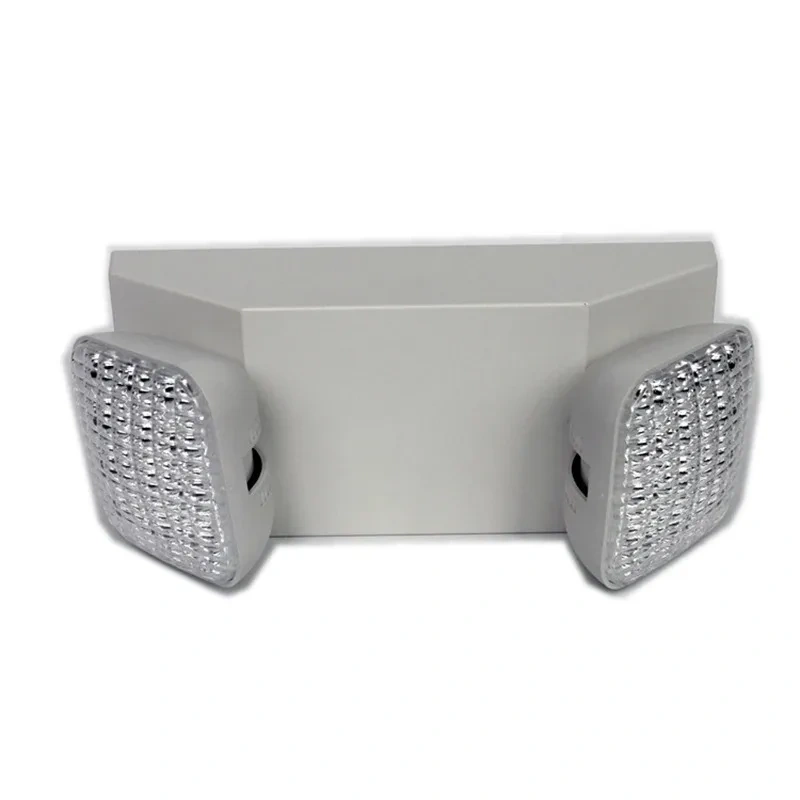
Core Types of Emergency Lights Explained
Different types of Emergency Lights are used in different ways and in different operating architectures. Choosing the best arrangement relies on the size of the building, the type of occupancy, and the availability of upkeep resources.
Self-Contained Emergency Units
Fixtures that are self-contained have the lamp, battery, and charge circuits all built into one housing. Because they are easy to set up and don't cost much, these self-contained units are the most popular choice for small to medium-sized businesses. Each device works on its own, so there are no single points of failure like there are in centralized systems.
Modern LED units that are self-contained put out between 600 and 1200 watts and run for 90 to 180 minutes on nickel-cadmium or lithium-ion batteries. Die-cast metal housings with IP65 ingress protection work well in tough places like loading docks and parking garages. Compared to central battery designs, installation only needs an AC mains connection, which cuts down on work costs.
For retrofit jobs where the current electrical grid can't handle centralized systems, these units work great. Architectural lighting designers like small form factors that don't make finished areas look too big. As part of maintenance, batteries need to be replaced every three to five years. This is a job that building staff can do without any special training.
Central Battery Systems for Large Facilities
Centralized emergency power systems are helpful for big business parks, airports, and hospital sites. Multiple remote lighting heads are powered by a single battery bank in a separate electrical room. These are connected to emergency circuits. When compared to distributed self-contained units, this design makes tracking easier and monitoring better.
Central systems work best for jobs bigger than 50,000 square feet, where economies of scale make up for the higher starting cost. Facility managers get unified monitoring screens that show the health of batteries, the continuity of circuits, and the state of each fixture in real time. Scheduled upkeep focuses on a single spot instead of hundreds of units spread out across the area. This saves money on labor over the 15–20-year life of the system.
Engineers use central battery systems for projects that need longer runtimes than three hours. This is common in high-rise buildings where people need to be able to leave quickly and the stairwells need to be lit up for a long time. Lithium iron phosphate battery technology now makes batteries last ten years longer and take up 60% less space than standard lead-acid systems.
Combined Exit Sign and Emergency Lights
Dual-function lights combine emergency floodlighting with directed exit signs, making code compliance more efficient. When these combination units are put up above entrances, they light up the area around them and mark the exits at the same time. Smoke can't cover green or red photoluminescent screens, which fills in a major gap in current spotlighting methods.
More and more, architectural standards call for these combination goods because they cut down on the need for ceiling penetrations and electrical rough-ins. Universal mounting bolts can fit door frames of different sizes, which makes buying easier for builders who are in charge of a variety of buildings. Edge-lit LED technology only uses 3 to 5 watts of power when it's working normally, which saves a lot of energy in big setups.
Standardized emergency exit signs make it easier to keep track of supplies and find new parts, which procurement managers like. Universal chevron symbols meet the standards for ISO 7010 pictograms, which is important for foreign hotel chains that want to make sure that safety signs are the same all over the world.
Portable and Rechargeable Emergency Lighting
For industrial buildings and outdoor construction sites, illumination that can be moved to different work areas is needed. Rechargeable LED work lights with built-in battery packs give off 500 to 2000 brightness for 4 to 8 hours, which is enough for temporary lighting when the power goes out or equipment breaks down.
The cases of these portable units are toughened and have impact resistance ratings of IK08 or higher, so they can handle the rough conditions that are typical in docks and factories. With magnetic fixing bases and flexible tripods, you can set up quickly and without any tools. Facility managers keep movable Emergency Lights on hand in case the power goes out temporarily for repair or to make room for new equipment.
For garden installation jobs that last past daylight hours, outdoor lighting workers use weatherproof portable types with IP66 or IP67 ratings. Lithium-ion battery technology makes it possible for small designs that weigh less than five pounds to have professional-grade output that is the same as AC-powered work lights.
LED vs. Halogen Technology Comparison
LED technology has largely replaced incandescent technology in new installs because it works so much better. LED sources give off 130–150 lights per watt, while gas lamps only give off 15-20 lumens per watt. This means that 75% less battery power is needed. This increase in speed immediately leads to fixtures that are smaller, lighter, and cost less to make.
Differences in operational lifetimes are just as shocking. Halogen lights need to be replaced every 2,000 to 4,000 hours, while LED units can last up to 50,000 hours before losing 30% of their lumen output. When facility managers figure out the total cost of ownership, they find that LED systems pay for themselves within 18 to 24 months because they don't need to repair lamps as often and use less energy.
Halogen fixtures are only used in certain high-temperature situations (above 60°C), where LED driver electronics have trouble staying reliable. When it comes to standard business settings, LED technology is the only option that makes sense for procurement managers who need to balance cost, performance, and safety.
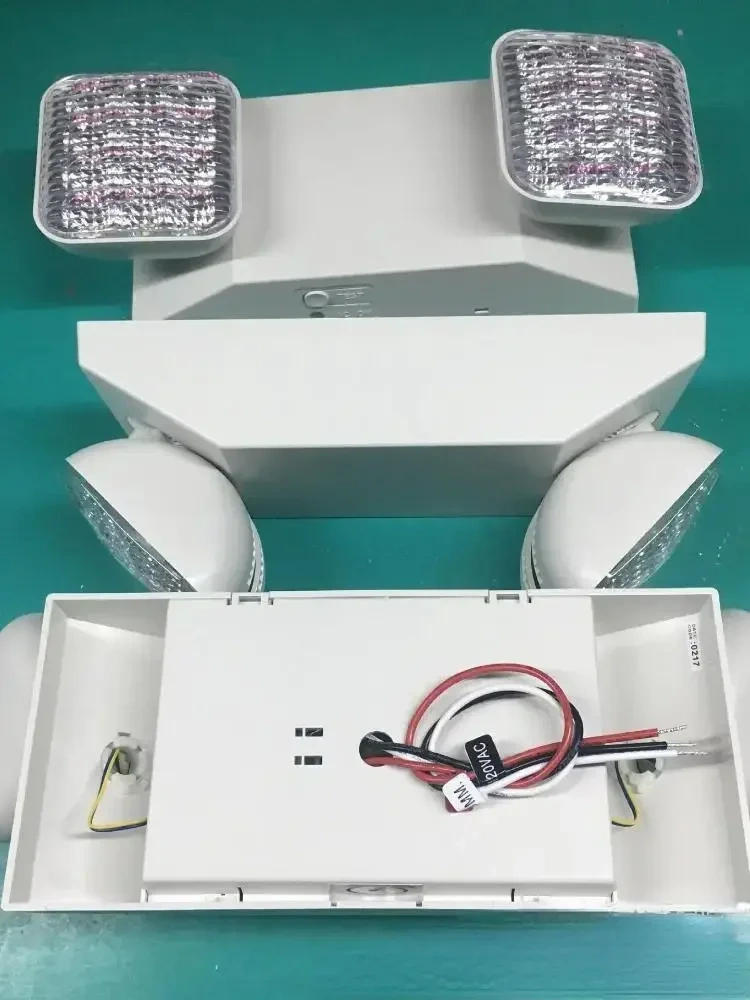
How to Choose the Right Emergency Lights for Your Business?
To choose the right Emergency Lights, you need to carefully look at the building's features, its legal requirements, and your working needs. Buying choices made during the planning or remodeling stages of a building have long-lasting effects on its safety and upkeep costs.
Assessing Facility Requirements and Risk Levels
The type of occupancy in a building determines the necessary lighting needs. Assembly spaces like theaters and conference centers need more light and a wider range of coverage than office buildings do because people who aren't familiar with the space need to be able to see clearly. For warehouses with high-rack storage, the mounting places need to be higher than 30 feet, so high-output lamps that provide enough light at ground level are needed.
Classifications of dangerous locations add more complications. For chemical plants and grain elevators, explosion-proof housings that are approved for certain temperature and gas groups are needed. To avoid costly mistakes during installation, procurement managers must make sure that goods have the right ATEX or UL 844 certifications for the building they are going to be used in.
When it comes to lighting stairwells and horizontal exit paths, buildings with more than one floor pose special problems. Building rules require that each step tread have a certain amount of light, which means that photometric calculations have to be done during the planning process. Before finishing the procurement requirements, engineering contractors and lighting designers use AGI32 software to model how well Emergency Lights will work.
Critical Evaluation Criteria for Product Selection
The fixing height, beam spread, and surface reflectance must all be taken into account when figuring out the brightness. The guidelines measure how bright the area is at floor level, not how many lumens the fixtures put out. A 12 foot light with Type V distribution that gives off 800 lumens may give off 1.5 foot-candles at ground level, which is more than what the code requires. Even if the output stays the same, the same device at 20 feet might not meet compliance standards.
Different places and building heights have different battery life needs. Standard 90-minute capacity is enough for most uses, but 180-minute systems are often needed in high-rise buildings and underground facilities. Facility managers have to weigh the need for longer run times against the costs of bigger batteries, heavier fixtures, and replacements.
Durability in harsh environments has a direct effect on lifetime costs. In places where temperatures are high, there is a lot of wetness, or the air is corrosive, fixtures need to have the right ingress protection and house materials. Marine-grade finishes that can stand up to road salt are needed in parking spaces. Food making plants need housings made of stainless steel that can handle being cleaned with high pressure. Not specifying enough safety leads to early breakdowns and ongoing maintenance costs.
Supplier Reliability and Long-Term Partnership Considerations
When buying Emergency Lights, it's not just about the product details; it's also about what the seller can do. Distributors that work with a lot of different markets need makers that have a lot of different certifications, like UL, CE, RoHS, and DLC lists. For international projects, voltage flexibility across 120V to 277V input values is needed so that products don't differ depending on the country.
Being able to get technical help is very important when installing things or building complicated systems. Beyond unit price, suppliers who offer help with application planning, photometric formulas, and on-site commissioning support add measured value. Facility managers like it when makers keep regional stores well-stocked so that new parts can be quickly sent out when things need to be serviced.
The terms of the warranty show that the maker trusts the product to work well. Most companies offer warranties that last two years, but some companies offer warranties that last five years and include performance promises for the batteries. Longer guarantees lower the total cost of ownership by delaying replacement costs and cutting down on upkeep work during the first few years of use, which are very important.
Payment terms, shipping schedules, and logistics planning should all be talked about during talks for bulk purchases. For big projects with many stages, providers need to make sure that their products are always available during building periods that could last 18 to 36 months. Framework deals with chosen suppliers help sourcing managers get better prices and keep the supply chain running smoothly across multiple project sites.
Installation and Maintenance Best Practices
If Emergency Lights work reliably in real situations, it depends on how well they were installed and how often they are serviced. Code-compliant systems become risks when they aren't properly maintained or when shortcuts are taken during installation.
Installation Guidelines for Different System Types
Self-contained units need to be plugged into an AC wall outlet so that the batteries can stay charged when the power goes out. Electrical workers need to make sure that circuits have hot wires that are not switched. Connecting to lighting circuits that are switched is a common mistake that drains batteries. Light sources should be mounted 7 to 10 feet above the finished floor so that coverage area and illumination level are both equal.
When designing central battery systems, it's important to carefully consider the size of the wires and the voltage drop that happens along long cable runs. From the battery rooms to the farthest lighting heads, emergency lines often go for hundreds of feet. Installers need to use conductor sizes to make sure that the voltage at the farthest fixture stays within the limits of the equipment. This usually means using 12 or 10 AWG wire, while normal lighting circuits use 14 AWG.
Testing is the last and most important part of the building process. Commissioners have to pretend the power goes out to make sure that each device lights up, stays on for the required amount of time, and meets the minimum light levels. Baseline records for future checks are made by keeping records that include photometric readings taken at set test points. This commissioning data is very important during final checks by the body having jurisdiction (AHJ) that decide whether to issue an occupancy permit.
Routine Maintenance and Testing Protocols
As part of monthly functioning checks, power is briefly cut off to the fixture, illumination is checked, and then normal operation is restored. In just 30 seconds, this test can find broken lamps and disconnected batteries without draining them too much. The facility staff usually tests every outlet once a month using a written plan to make sure they check everything.
For annual discharge tests, fixtures must be run on battery power for the full recommended time, which is usually 90 minutes. This thorough test shows that the battery's power is still enough for emergencies. Fixtures that didn't keep producing during the test time need new batteries right away. To keep business operations running smoothly, annual testing should take place during times when few people are in the building.
How often you need to change a battery depends on the type of chemistry it uses and where it is used. Nickel-cadmium batteries last between 3 and 5 years, but lithium-ion technology makes them last 7 to 10 years. High temperatures in the environment speed up the degradation of batteries. Buildings with mechanical rooms that are warmer than 30°C should expect shorter replacement cycles. When planning to buy something, you need to include the cost of batteries on your budget as an ongoing cost that is different from the initial cash investment.
Common Installation Mistakes and How to Avoid Them
When there isn't enough space between units, dark spots form that don't meet the minimum lighting standards. Instead of depending on rough light count predictions, procurement managers should demand photometric calculations during the design phase. Professional lighting plans that use point-by-point analysis make sure that the codes are followed before the installation starts.
When mounting is done wrong, covering is reduced. Emergency Lights units have photometric data that tells you how to position them in relation to the area you want to light up. When placed upside down, wall-mounted units direct light toward ceilings instead of exit routes, making them useless even though they are working. Installation teams need clear mounting plans to keep them from getting the angle wrong.
Neglecting surrounding factors leads to mistakes before they should happen. When standard units are put in outdoor covers, they get wet and the temperature changes more than what was intended. Specifiers must choose fixtures with the right ingress protection ratings (at least IP65 for locations that will be open to the weather) and working temperature ranges for the places where they will be installed. These steps keep guarantee claims and unexpected repair costs from happening.
Conclusion
When choosing Emergency Lights, it's important to think carefully about system designs, government rules, and the supplier's abilities. Self-contained LED fixtures work best in most situations because they are easy to install and easy to maintain. On the other hand, central battery systems are better for big buildings that need complex tracking. Purchasing managers have to weigh the original costs against the costs that come up over time, such as replacing batteries, using energy, and hiring people to do upkeep. If you choose makers with a good reputation, lots of certifications, and quick technical support, you can build long-lasting relationships with them that help you meet your long-term building safety goals. If you place systems correctly using photometric design principles and do regular upkeep, they will work reliably when people's safety depends on them.
FAQ
What distinguishes emergency lights from exit signs?
When the power goes out, Emergency Lights give off general light that makes it safe to move around in dark places. Exit signs specifically mark ways to leave a building, and guiding cues are always visible. Many new lights do both jobs at the same time, combining emergency floodlighting with photoluminescent or LED exit signs in one housing. This makes placement easier and lowers the cost of the equipment.
How long do emergency light batteries typically last?
How often a battery needs to be replaced depends on its chemistry. Nickel-cadmium batteries need to be replaced every three to five years, but lithium-ion batteries can last up to seven to ten years. The operating climate has a big effect on life; high temperatures speed up the breakdown process. Manufacturers say how long something is supposed to last based on a temperature of 20°C. At higher temperatures, the expected service life drops by a similar amount. Testing batteries for discharge once a year lets you know which ones need to be replaced before a problem.
Are solar-powered emergency lights suitable for commercial buildings?
Solar Emergency Lights can only be used outside, where the solar panels can get enough sunshine. The inside of commercial buildings don't get enough sunlight for batteries to charge. Exterior building edges, parking lots, and walks are all good places to use solar options. Nevertheless, standard AC-powered systems with battery backup are more reliable for important indoor emergency egress lighting that can't count on the weather staying stable.
Partner with USKYLED for Reliable Emergency Lighting Solutions
USKYLED sells state-of-the-art Emergency Lights solutions that are designed to work in harsh business and industrial settings. Our wide range of products includes self-contained LED lights, centralized battery systems, and OEM solutions that are made to fit the needs of your particular project. We are your reliable source for safety illumination in North America, Europe, and beyond, thanks to our UL, CE, and RoHS certifications that let you buy things from anywhere in the world. Get in touch with our technical team at sales@uskyled.com for individual talks, great bulk discounts, and expert advice on how to make sure your building meets all safety requirements.
References
1. National Fire Protection Association. (2021). NFPA 101: Life Safety Code, 2021 Edition. Quincy, MA: NFPA Publications.
2. Illuminating Engineering Society. (2020). IES RP-1-20: Recommended Practice for Lighting Maintenance. New York: IES Technical Publications.
3. Occupational Safety and Health Administration. (2019). OSHA 1910.37: Means of Egress - Emergency Action and Fire Prevention Plans. Washington, DC: U.S. Department of Labor.
4. American National Standards Institute. (2018). ANSI/UL 924: Standard for Emergency Lighting and Power Equipment. Northbrook, IL: Underwriters Laboratories.
5. European Committee for Standardization. (2019). EN 1838: Lighting Applications - Emergency Lighting. Brussels: CEN Publications.
6. International Code Council. (2021). International Building Code, Chapter 10: Means of Egress. Country Club Hills, IL: ICC Publications.


