German office buildings are putting more and more emphasis on modern lighting control systems that are accurate, use little energy, and can be easily adjusted. DALI-2 LED Drivers have become the best option because they can be digitally addressed and work well with building control systems. Chinese companies have set themselves up to be the best place to get these parts because they follow strict international rules and have low prices. German purchasing managers know that Chinese companies can supply large quantities of approved, high-performance drives that meet strict European rules and have flexible supply chains and the technical flexibility to fit a wide range of business needs.
Understanding the Growing Demand for DALI-2 LED Drivers in German Offices
The Technical Foundation of DALI-2 Technology
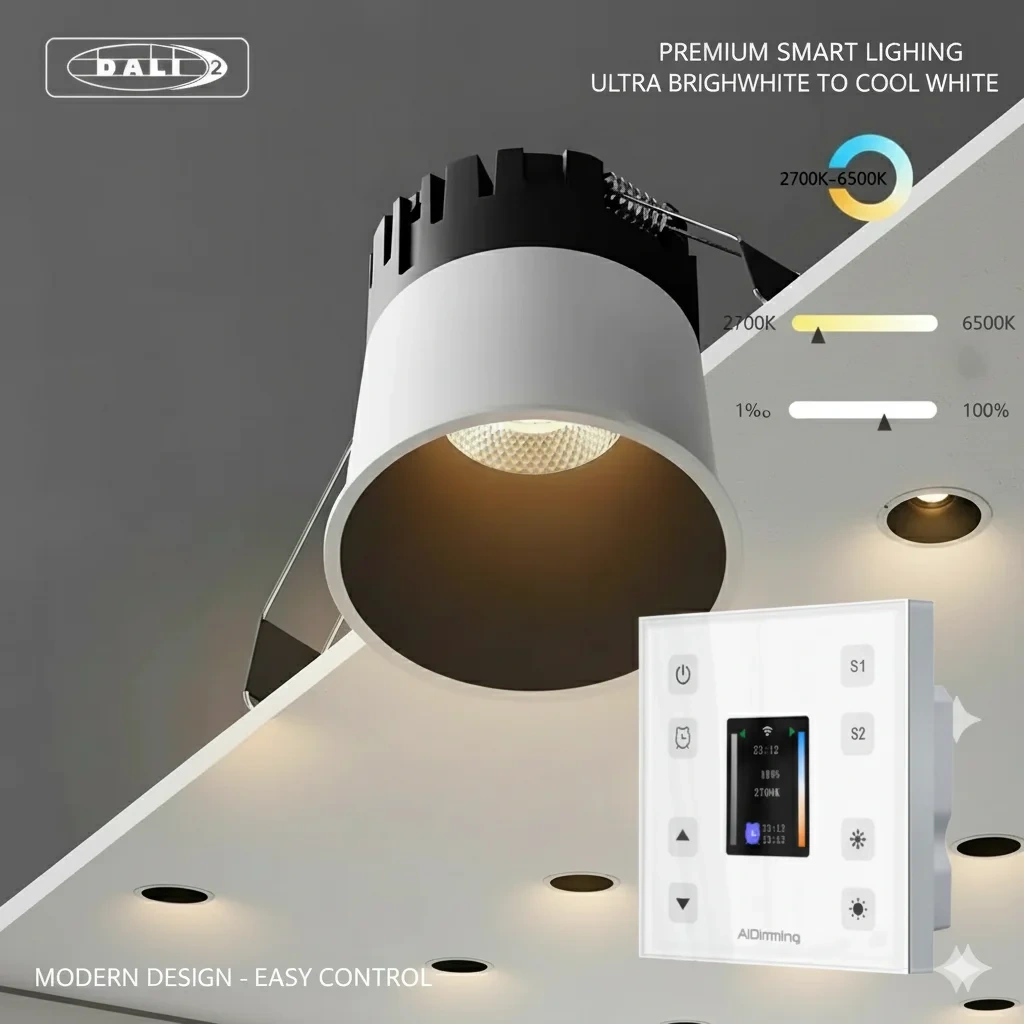
The Digital Addressable Lighting Interface standard is a big change in how business lighting is controlled. DALI-2 is different from traditional dimming systems because it lets controls and individual lighting devices talk to each other in both directions. Facility managers can change the brightness, keep an eye on how much energy is being used, and set up lighting scenes for whole office floors because each driver is given a unique digital address. The standard is backward compatible, which means it can work with current systems and support more advanced features like color temperature tuning and daylight gathering. This digital design makes wiring easier and provides diagnostic data that helps plan upkeep better.
Economic and Environmental Benefits for Office Spaces
German office managers are under more and more pressure to cut costs while still meeting requirements for sustainability. Modern drivers get more than 120 lumens per watt of light output, which means they use 40% less energy than older fluorescent ballasts. With precision dimming, the light output can be adjusted to fit the usage and ambient conditions, which cuts down on energy use even more. The Energy Performance of Buildings Directive in the European Union encourages building managers to use smart lighting systems that keep track of how well they use energy. Digitally controlled drivers produce data on usage that can be checked. This makes compliance reports easier and helps green building certifications like LEED and BREEAM.
Alignment with Smart Building Integration Trends
Modern business buildings in Germany connect lighting to large-scale building control networks. DALI-2 works directly with systems like BACnet and KNX, which lets you handle lights, security, and HVAC all from one dashboard. This convergence helps health programs in the workplace by matching lighting plans that are good for the circadian rhythm with when employees are present. As floor plans change, office managers use real-time occupancy data from connected DALI-2 LED Drivers to make the best use of space and rearrange lighting zones. It keeps vendors from getting too involved, stops technology lock-in, and makes long-term system changes easier.
Why China Has Become the Preferred Source for DALI-2 LED Drivers?
Cost Competitiveness Without Compliance Compromise
Chinese makers have figured out how to strike a good mix between low prices and strict certification rules. A regular constant-current driver with a combined DALI-2 interface costs 30–45% less than similar units with European brands, but it still has the full CE label and RoHS material compliance. This lower price comes from production areas that are vertically linked, which group together component providers, PCB fabricators, and assembly sites in the same area. Volume economies let companies keep their competitive edges while covering the costs of tests. German purchasing teams make sure that Chinese drives go through the same LM-80 thermal testing and IEC 62386 protocol approval as high-end Western names.
Broad Product Portfolios Matching Diverse Requirements
The Chinese lighting business has a huge range of products, with power levels from 10W to 300W, different input voltage ranges, and different output current configurations. Manufacturers make drivers with Class I or Class II insulation, water protection from IP20 to IP67, and case sizes that are best for different types of luminaires. Because of this, buying teams can get exact technical specs for pendant fixtures, recessed troffers, linear systems, and track-mounted spotlights from just one source. Customization services include output setting, extra dimming interfaces, and better thermal management. These services help with application-specific problems without the need for large minimum orders that European makers have to meet.
Scalable Supply Chains and Rapid Fulfillment Capacity
China's production system can handle the large amounts of goods that are needed for office spaces with multiple buildings and renovation projects that are done in stages. Leading makers have automatic SMT lines that can handle more than 50,000 units per day. These lines are backed up by buffers of spare parts that keep supplies from running out. This size means that lead times for standard products are 3–4 weeks and for customized products they are 6–8 weeks, which is a long time longer than European production plans. Established freight routes to the ports of Hamburg and Rotterdam make sure that travel times are reliable. Additionally, consolidated shipment services make logistics easier for buyers who need to coordinate the movement of a variety of goods.
Comparing China-Sourced DALI-2 LED Drivers with Global Brands
Technical Performance Metrics and Feature Parity
Testing by a third party shows that Chinese DALI-2 LED Drivers meet the same standards as well-known Western makers. Power factor correction is higher than 0.95 across all load ranges, overall harmonic distortion stays below 15%, and the dimming curves go from 100% output to 1% output without flickering. Using metal substrates and potting materials in thermal management designs keeps junction temperatures within L70 limits, which supports 50,000-hour lifespans. Advanced models have temperature adjustment, active power factor correction, and dimming settings that can be set up to meet Tridonic and Osram's feature sets. The most important difference is not in what they can do, but in how well they've been placing their name in the market in the past.
Real-World Implementation in German Office Projects
A financial services center in Frankfurt replaced 8,000 light bulbs with drivers from China on all 12 floors. This cut energy use by 38% per year, which was the goal. The project called for drivers with both DALI-2 and 0-10V dimming connections. This way, controller changes could be made in stages without having to replace the fixtures. Installation teams said there were no problems with the lights working with old Zumtobel and Trilux lights. A Berlin creative office building chose Chinese drivers because they had emergency lighting built in. These drivers combined two parts into one unit, which made wiring easier and installation faster. These examples show that they can work in challenging business settings in Europe, where performance gaps directly lead to complaints from tenants and higher maintenance costs.
How to Successfully Procure DALI-2 LED Drivers from China?
Identifying Reputable Suppliers and Quality Assurance
Verifying a supplier's certification through third-party sources like TÜV SÜD and Intertek is the first step in a good supplier review. Ask for test results that show compliance with the IEC 62386-102 process, EMC standards according to IEC 61547, and surge protection testing. Reputable makers keep their quality systems up to date with ISO 9001 and let large orders go through the factory for audits. As part of the sample testing, the protocol analyzer should be validated using DALI Alliance diagnostic tools to make sure that the right devices are found, that the right groups are addressed, and that the emergency lights work. Some signs of a supplier's stability are who owns the production plant, how many R&D staff members they have, and client references from European wholesalers that go back more than one year.
Pricing Structures and Negotiation Strategies
Chinese drivers are priced in tiers, with discounts for orders of 500, 2,000, and 10,000 units. For mid-level quantities, base prices for 40W Class II drivers run from €8 to €15. Customization fees add 15–25% for different specs. Payment terms usually require 30% payment with balance against bill of lading, though established relationships may secure net-30 or letter of credit arrangements. When you commit to annual sales deals or combine multiple SKUs, you have more negotiating power. To keep quality from changing from one delivery to the next, include phrases that say when component substitutions are allowed and how much variation is allowed between batches.
Logistics Planning and Lead Time Management
It takes 35 to 40 days for ocean freight to get from Shenzhen to ports in Europe, plus an extra 5 to 7 days for customs clearance. Air freight cuts travel time to 7–10 days but costs 4–5 times more, so it's only worth it for projects with tight schedules. Smaller buyers can share 20-foot containers through container consolidation services. This cuts the cost of freight per unit from €2.50 to €0.80. Build up a 10-15% extra stock to account for changes in transport times and unplanned project growth. If you're looking for drivers with built-in backup batteries, make sure you talk to freight forwarders who know about lithium battery rules. Misclassification can cause costly delays.
Installation, Programming, and Integration: Leveraging DALI-2 LED Drivers in German Offices
Installation Protocols for Commercial Environments
It's important to pay attention to temperature management and electrical separation when installing a driver the right way. Install drivers in light housings that have enough air flow—at least 10 mm of space around the edges of the case is needed to keep heat from building up and shortening the life of the parts. Put strain reliefs on the input and output wires to keep the solder joints from getting stressed out when the fixture is being moved. Check the direction of the mains voltage and make sure that the line-neutral wiring is the same across all circuits to avoid ground loop interference. Handheld photometers measured at 1000Hz sampling rates should be used to make sure that installations don't flicker. This is because poor grounding shows up as low-frequency modulation that people can see.
Programming Lighting Control Networks
Setting up a DALI-2 network includes finding devices, giving them addresses, and setting scenes in a planned way. To find each driver, use specialized setup software to scan bus segments and look for its 24-bit unique identity. Assign short addresses using sensible patterns that match the floor plans. Group drivers by zone to make updating easier in the future. Set the base amount of light needed for the job, which is usually 300 lux for desk areas and 150 lux for circulation areas. You can set time-based scenes to lower output during lunch and switch to cleaning modes in the evening. This way, the changes happen smoothly and don't cause people to complain.
Compatibility with Building Management Systems
Add DALI devices that can connect to BMS networks that use BACnet or Modbus and translate between lighting standards. Connect driver status points to BMS displays to see information like how much power is being used, how many hours the lights have been on, and problem conditions. This connection lets you look at energy use across the whole building and send repair alerts before they get too hot for the drivers. Make sure the gateway devices can handle enough DALI bus segments to fit the number of fixtures. Usually, controllers handle 4–8 segments with 64 drivers each. Talk to the IT staff about network security policies because IP-connected lighting controls need to be split up into VLANs and have their firmware updated.
Conclusion
By buying DALI-2 LED drivers from Chinese companies, German office buildings can get better lights and more efficient operations. The strict compliance standards, wide range of customization options, and scalable output all work together to meet the high standards of European business projects. These parts are reliable in important uses, as shown by their verified certificates and track records of successful implementation. Competitive price structures give procurement professionals strategic benefits because they free up cash for bigger facility improvements while keeping technical standards important for employee health and building automation goals.
FAQ
Are Chinese DALI-2 drivers compatible with European lighting control systems?
Chinese drivers that have been properly approved fully meet IEC 62386 standards. This means that they can work with controllers from Helvar, Lunatone, and other European companies without any problems. Protocol conformance testing checks the accuracy of command responses and the time limits for the bus. Buyers should ask for DALI Alliance certification marks that show the protocol application has been checked by a third party. This ensures compatibility across installs from different vendors.
How can I verify the quality of drivers before large-scale procurement?
Ask for full test records that include LM-80 temperature data, results for surge immunity, and protocol analyzer logs. Pilot setups should be done with sample units, and performance should be tracked for 90 days under real load conditions. Independent third-party inspection services can check the quality of a plant by checking its production processes and how it gets its parts.
What warranty terms do Chinese manufacturers typically offer?
Standard guarantee terms are three to five years and cover problems with the way the product was made and parts that stop working. Reliable sellers offer advance replacement programs that send new units before the failed ones are sent back, which keeps projects running as smoothly as possible. To speed up the settlement process, make it clear how to file a warranty claim, what paperwork is needed, and whether the guarantee covers the cost of returning the item.
Partner with USKYLED for Certified DALI-2 LED Driver Solutions
USKYLED sells high-quality DALI-2 LED drivers that were designed to work with business equipment in Europe. Our goods fully comply with CE and RoHS standards and offer flexible output options to meet a wide range of office lighting needs. We help buying teams by providing clear technical paperwork, test reports from the factory, and quick engineering advice. Please email our experts at sales@uskyled.com to talk about your large volume needs and get quotes for your project from a reliable and trusted DALI-2 LED Drivers provider.
References
1. Digital Addressable Lighting Interface Alliance. (2022). DALI-2 Certification and Testing Procedures for LED Control Gear. DALI Alliance Technical Documentation Series.
2. Fraunhofer Institute for Building Physics. (2021). Energy Efficiency Impacts of Intelligent Lighting Control in German Commercial Buildings. Stuttgart Research Report IBP-2021-34.
3. European Committee for Standardization. (2020). IEC 62386 Parts 101-103: Digital Addressable Lighting Interface Protocol Requirements. CEN-CENELEC Standards Publication.
4. German Energy Agency (dena). (2023). LED Driver Procurement Guidelines for Commercial Retrofits. Berlin: Federal Ministry for Economic Affairs and Climate Action.
5. Lighting Industry Association Europe. (2022). Comparative Analysis of Global LED Driver Manufacturing Standards and Compliance. Brussels: LIAE Technical Report Series.
6. TÜV Rheinland Certification Body. (2021). Quality Assessment Framework for Asian-Manufactured Lighting Components in European Markets. Cologne: TÜV Testing and Certification Standards.


