Outdoor lighting has many uses in business, industry, and city settings, and putting it in the right category helps buying teams make smart choices. The main types are landscape lighting, which brings out the beauty of natural and architectural features; security lighting, which is meant to keep people out and improve surveillance; functional lighting for walkways, parking lots, and work areas; and decorative lighting, which reinforces brand identity and looks good. When buying managers and building managers know these differences, they can make sure that lighting plans meet safety standards, energy costs, and aesthetic goals.
Overview of Outdoor Lighting Categories
Outdoor illumination systems have changed into more than just better sight. Commercial buyers today, like engineering managers at building companies and product line leaders at lighting distributors, need solutions that are both efficient and safe for the environment.
Different types of lighting are used for different things. For safety and efficiency, warehouses need high light rates. Hotels and shopping malls put an emphasis on atmosphere as well as ease of navigation. Municipal projects have to follow strict rules, such as getting Dark Sky certifications and being eligible for energy rebates. If you choose the wrong group, you could end up paying too much, not having enough coverage, or having equipment break down too soon.
Being exposed to weather poses big problems. Over time, changes in temperature, humidity, salt spray in coastal places, and UV rays all make fixtures less effective. This is the reason why IK08+ impact resistance and water protection grades (IP65 minimum, IP67 preferred for installations below ground level) have become industry standards. To make sure that projects will work with new energy rules and needs in the future, procurement professionals must also check that they are compatible with smart controls like 0-10V dimming, daylight sensors, and networked systems.
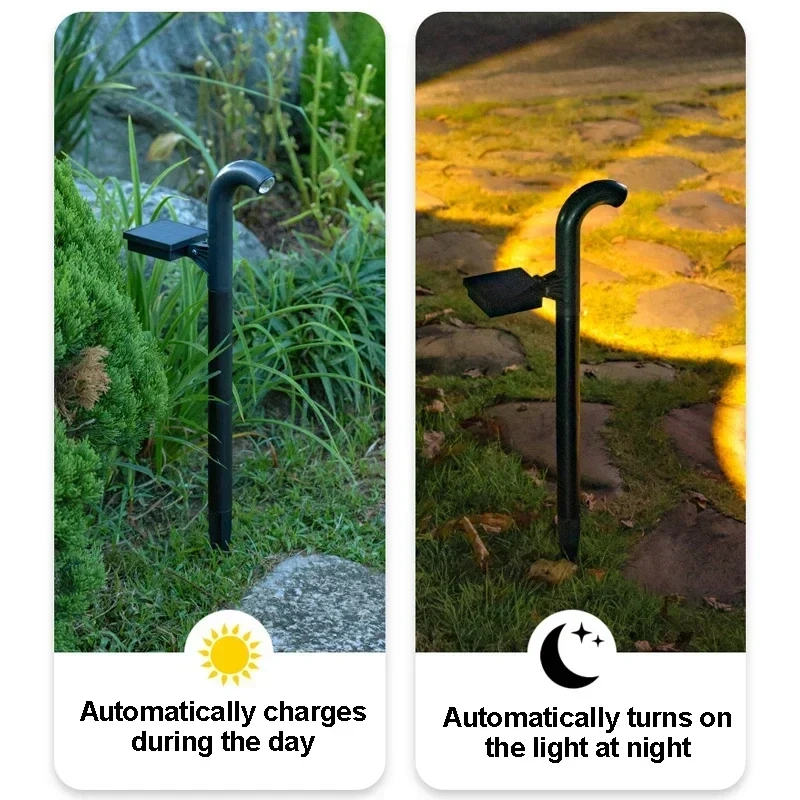
Dimensional Analysis of Major Outdoor Lighting Types
In business and industry settings, different types of lights solve different problems. Knowing about their technology features helps with defining requirements and evaluating vendors.
Landscape Lighting for Commercial Properties
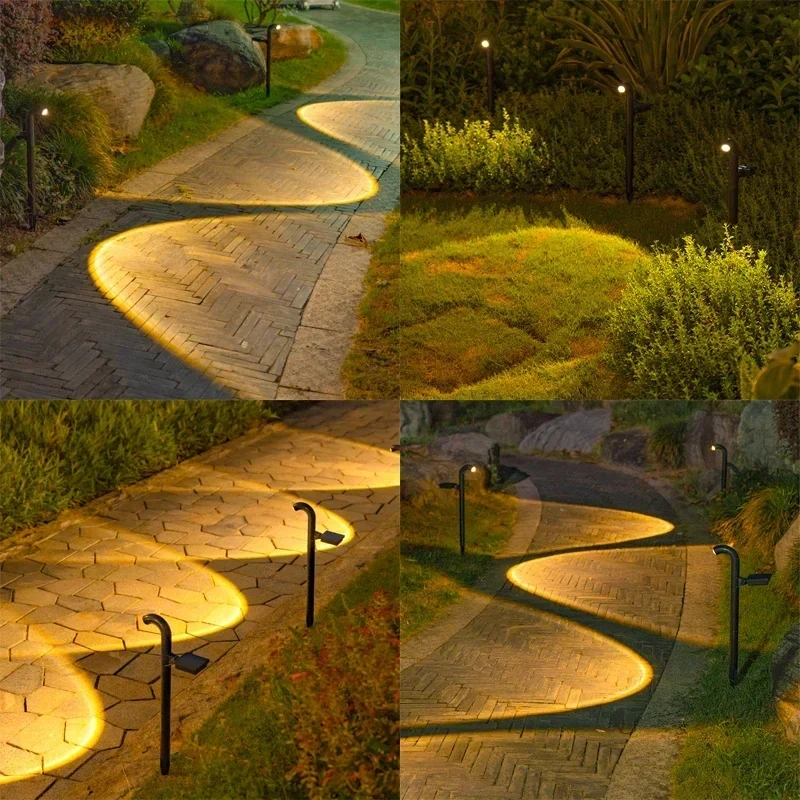
Pathway signs, uplights, spotlights, and flood lamps are all types of landscape lighting that are used to improve both hard and soft landscaping. These systems do two things: they make the area look interesting at night and make the boundaries safer by getting rid of shadowy areas.
Path lights usually work at 12V low voltage, which makes placement easier and lowers the risk of electrical shock. Spotlights with movable knuckle mounts let you aim precisely at signs, tree tops, or building fronts. Large vertical surfaces can be washed evenly with flood lights that have beam angles between 60° and 120°. For correct color rendering of plants and building materials, High-CRI LEDs (90+) are needed. Die-cast aluminum housings and UV-stabilized polycarbonate lenses are required because fixtures must be able to handle acidic soil, irrigation water, and mechanical impact from lawn care tools.
Security and Perimeter Lighting Systems
When lighting is designed with security in mind, it focuses on lumen output, even covering, and integrating with video systems. Parking garages, loading docks, and the edges of the building are lit up by wall packs, pole-mounted area lights, and high-intensity floods with power levels from 50W to 300W LED.
Motion monitors lower the amount of energy used when the system is not being used and instantly turn on all the lights when someone tries to break in. Autonomous dusk-to-dawn operation is made possible by photocells, which eliminates mistakes made by hand. To keep glare and light from trespassing onto nearby properties, mounting heights between 20 and 40 feet need to be carefully planned out photometrically. Performance in cold weather is important—in northern regions, drivers must keep power stable down to -40°C. Surge protection (4kV–10kV) is very important for outdoor devices that get struck by lightning.
Functional Task Lighting for Operations
Outdoor lighting that works helps with certain business tasks, like lighting up loading bays, equipment yards, paths, and outdoor eating areas. Wall packs with cutoff lenses reduce uplight while focusing light on the area that needs it. Bollard lights protect against impacts and show the way. Car wash bays, drive-throughs, and building openings all use canopy lights.
Based on guidelines set by the Illuminating Engineering Society (IES), lighting planners figure out how many footcandles are needed for each type of application. Fixtures that are easy to maintain—pole-mounted lights need to be serviced with a bucket truck, while wall-mounted units can be serviced with a ladder—are chosen with this in mind. Vandal-proof designs, like polycarbonate shields and tamper-proof parts, lower the cost of repair in places that people can see.
Decorative and Architectural Accent Lighting
Decorative features help people remember a brand and make business properties seem more valuable. String lights, linear grazing systems, and RGBW floods that change colors can be used for fixed installations or yearly events to change the look of the outside of buildings.
DMX512 or DALI control methods are often built into these systems so that effects can be synced across multiple lights. Hotels, shopping malls, and nightlife areas use architectural lighting to keep their doors open later and get more people to walk through them. Color clarity, beam control, and dimming ease are more important than how well it works. But even projects that are just for looks have to follow local electricity rules and get the right permits, especially if they are attached to historic buildings.
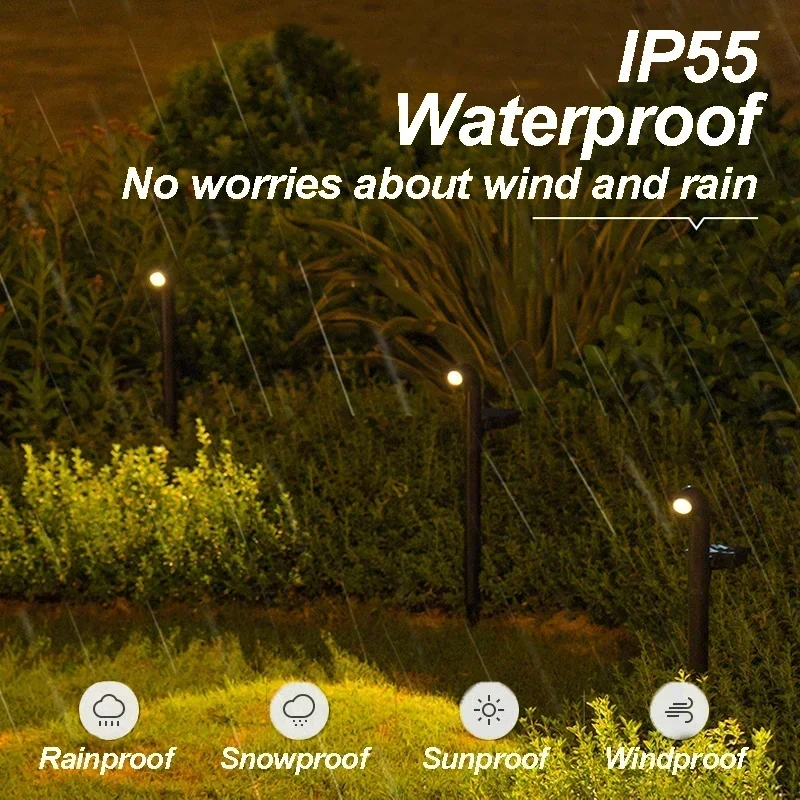
Comparison of Lighting Technologies: LED, Solar, Halogen, Wired, and Wireless
The choice of technology has a direct effect on the total cost of ownership, the frequency of upkeep, and the reliability of the system over its 10–20-year lifecycle, which is normal for business installs.
LED lamps are very popular in the business market because they have a light output of more than 130 lumens per watt, can be used for more than 50,000 hours (L70), and are very good at dimming. Utility bills have less reactive power charges when LED drivers have power factors above 0.9. Thermal control with finned aluminum heat sinks stops color shift and premature lumen loss. Utility refunds, which often cover 20–40% of startup costs, are guaranteed to be available with a DLC Premium listing.
Halogen and metal halide systems are still used, but only in very specific situations where very high color rendering or quick warm-up at very low temperatures are needed. They use four to five times as much energy as LED lights of the same size, and they need to be replaced every 2,000 to 6,000 hours, which costs a lot of money in work. Most B2B buyers have stopped using these technologies, unless they are required by law or to protect historical sites.
Solar lights are easy to place because they don't need any wires, and they use no energy. But commercial-scale deployments have problems: cloudy weather makes charging less reliable; panel/battery systems make fixtures heavier and more vulnerable to wind; and light output is usually only 800-3,000 lumens, which is enough to mark paths but not enough for area security. Solar works best in rural areas that don't have access to electricity or for short-term setups where the cost of digging is higher than the cost of the equipment.
Large-scale projects still use wired systems (120V to 277V line power) because they work reliably, can be controlled from one place, and are compatible with building management systems. Wireless controls, like Bluetooth mesh and Zigbee, make retrofits more flexible and let you set up a smartphone without any special tools. Combining wired power with wireless dimming is a good way to find a mix between reliability and operating flexibility.
Energy Efficiency and Maintenance Best Practices for B2B Clients
Lifecycle cost analysis has to look at things like how much energy is used, how much it costs to fix things, how much it costs to buy new parts, and how downtime might affect business operations.
Compared to older methods, LED technology cuts energy use by 60 to 80%. A 150W LED flood can be used instead of a 400W metal halide light and maintains brightness levels better. This will save more than 500,000 kWh over ten years in a parking lot with 100 fixtures. When you multiply the energy savings by the cost of industrial power ($0.10 to $0.15/kWh), you can see that switching to LEDs is worth it within two to three years.
Maintenance rules include more than just changing the lamps. Inspections should be done every three months to make sure the seal is still in place, look for signs of water getting in, and clean the lenses to keep the flow of light going. Coastal sites need to be cleaned more often because salt builds up on them. Testing photocells and sensors makes sure that automatic settings work properly. If sensors don't work, lights will be on all the time, which wastes energy. Keeping detailed repair logs helps with guarantee claims and finds groups of fixtures that aren't working right.
When choosing a supplier, you need to look at things like guarantee terms (5–10 years is normal for commercial-grade LED fixtures), expert help, and the number of replacement parts that are on hand. Distributors that sell to customers in North America need to show proof of UL/ETL safety certifications, DLC Premium listing for rebates, and compliance with Buy America standards for projects that are backed by the federal government. By working with makers that offer OEM/ODM customization, you can get solutions for your project that off-the-shelf products can't, like non-standard mounting setups, custom color temperatures, or changed beam patterns.
Procurement Guide: How to Choose and Buy Outdoor Lighting for Business Needs?
Sourcing managers have to make tough choices based on technical standards, price limits, delivery schedules, and the need for long-term assistance. A organized method lowers risks and makes sure the best results happen.
Start with the lighting needs. Figure out the amount of footcandle you want based on the type of product and safety rules. Parking lots need between 1 and 5 footcandles, while building doors need between 5 and 10 footcandles. You can get IES files from the makers' websites and use design tools like AGi32 or Dialux to model how light is distributed. Make sure you like the coverage patterns before you buy.
Look at the external factors. Marine-grade coatings and stainless steel tools are needed for coastal jobs. Low-temperature motors are needed in cold places. Because the sun is stronger at higher elevations, the materials used need to be UV-resistant. Fixtures must have the right IP ratings: IP65 for safety against rain and snow, and IP67 for installations on the ground near drainage or puddles.
Instead of just looking at the buying price, compare the total cost of ownership. When you add up the costs of work and energy over ten years, a $200 light with a 50,000-hour life and 150 lm/W output does a better job than a $120 unit with a 30,000-hour life and 110 lm/W output. Ask for full standard sheets that show test results, not theoretical maximums.
There are pros and cons to both custom options and stock kits. Off-the-shelf landscape lighting kits work well for small-scale home projects but aren't durable enough or flexible enough for business setups. When you work with makers that offer OEM/ODM services, you can specify exact wattages, color temperatures, mounting brackets, and control interfaces. This method makes sure that it works with current technology and meets specific architectural needs.
Check the qualifications of the seller carefully. Instead of depending only on marketing claims, ask for copies of third-party test results (LM-79, LM-80, IP testing). Look at examples of projects that are related to yours. Make sure that the minimum order quantity and wait times work with the project plan. Set clear terms for technical support. Because of time zone and language hurdles, many foreign providers can't offer much after-sales help.
Conclusion
Finding the right types of outdoor lighting means finding a balance between technical performance, reliability in harsh environments, and long-term value. The landscape lighting, security, functional, and decorative groups all meet different business goals, such as protecting assets or making the brand look better. LED technology rules the business market because it is more reliable and efficient, and smart settings make it easier to change how things work. To be successful at procurement, you need to carefully evaluate suppliers, do a lifetime cost analysis, and pay close attention to certification standards. Now that facility managers and sourcing professionals know this, they can choose systems that provide long-lasting performance, legal compliance, and a clear return on investment (ROI) in a wide range of business and industrial settings.
FAQ
What lighting types work best for large commercial properties?
Large properties usually need a mix of lighting types. High-output area lights (100W–200W LED) are often used for parking and the edges of the property, wall packs are used at building entrances, and lower-wattage accent lamps are used for landscape lighting. Fixtures with flexible designs and mounting tools that can be adjusted should be given priority for future upkeep. Smart controls with zone schedule cut down on wasted energy on large campuses.
How do LED and solar options compare for maintenance demands?
LED cable systems don't need much upkeep—just cleaning the lenses and replacing the drivers every 7 to 10 years. Solar lights need more care, like replacing the batteries every three to five years, cleaning the panels to keep them charging efficiently, and checking the output during different times of the year. Solar works best in remote areas where the cost of digging is higher than the cost of the equipment, while LED works best in areas that get a lot of use and need steady light all year.
Can outdoor lighting integrate with existing security systems?
Modern LED lighting units work well with a lot of different systems. Networked systems that use PoE (Power over Ethernet) or wireless methods let lights react to security events, like turning on when an alarm goes off or when motion is detected. A lot of lights can be controlled by 0-10V signals sent by building management systems. This lets lighting, cameras, and entry control all work together. To keep the ability to change, work with companies that offer open-protocol support instead of proprietary systems.
Partner with USKYLED for Superior Landscape Lighting Solutions
To help you with your business outdoor lighting projects, USKYLED blends cutting-edge LED technology with quick response customer service. Custom OEM/ODM solutions are what our engineering team does best. We can make architectural flood lights with exact beam control or IP67-rated weather-sealed landscape lighting for harsh locations. We have strict quality standards that make sure our goods meet the needs of the North American market. These standards include LM-80 testing and DLC certification. Send an email to sales@uskyled.com to talk about the details of your project and get personalized advice from our technology experts.
References
1. Illuminating Engineering Society, "Recommended Practice for Outdoor Environment Lighting," IES RP-33-14, 2014.
2. U.S. Department of Energy, "LED Lighting for Outdoor Applications: Performance and Energy Savings," Building Technologies Office, 2018.
3. DesignLights Consortium, "Technical Requirements for Outdoor Lighting Products," DLC Premium Specification V5.1, 2021.
4. International Dark-Sky Association, "Outdoor Lighting Standards and Guidelines for Commercial Development," IDA Technical Committee Report, 2019.
5. National Electrical Manufacturers Association, "ANSI C136 Series Standards for Roadway and Area Lighting Equipment," NEMA Publications, 2020.
6. Building Owners and Managers Association International, "Energy Efficiency Best Practices for Commercial Outdoor Lighting Systems," BOMA Research Report, 2022.


