Putting LED strip lights on the walls of a business place changes it by giving it energy-efficient lighting that can be adjusted to fit different design needs. Hotels, schools, stores, and factories can all use LED wall lights and movable strip lighting systems to make their spaces look the way they want. Installing something correctly improves performance, lowers costs, and makes a product last longer. Technical standards, installation steps, and sourcing strategies needed to complete lighting projects that meet both aesthetic and functional needs are laid out in this guide for procurement managers, engineering teams, and building leaders.
Understanding LED Strip Lights and Wall Lights
What Are LED Strip Lights?
Flexible printed circuit boards with surface-mounted diode (SMD) LEDs are built into LED strip lights. These LEDs provide continuous straight lighting. These flexible lighting options can be cut to any length without the need for special tools. They can also be bent around corners and fit into tight areas. There are resistors on the circuit board that control the flow of current and keep the voltage from changing across the LEDs. Most commercial-grade strips work on low-voltage DC power (12V or 24V), which makes busy areas safer. You can choose from single white temperatures, RGB mixes, and customizable white systems that change continuously from warm 2700K to cool 6500K.
How LED Strip Lights Differ from Traditional Wall Lights?
Traditional LED wall lights come in fixed pieces with rigid housings and beam directions that are set ahead of time. Strip lighting is more flexible in terms of size than rigid lights. You can run strips along building features to make smooth light lines that draw attention to things like columns, coves, or show areas. Most of the time, these systems use 30 to 50 percent less energy than similar light or halogen wall-mounted systems. Because strip lighting is modular, it's easier to keep track of supplies because you only need to keep a few rolls on hand instead of thousands of fixture SKUs. This ability to shift is useful when changes are made to the plan in the middle of a project or when old buildings need to be fixed up.
Key Benefits for Commercial Applications
The main benefit is that they use less energy. Good LED strips use 8 to 12 watts per meter while giving off 800 to 1200 lights. Operating costs go down a lot over the usual 50,000-hour lifespan. This includes both energy bills and maintenance work. Design freedom lets you do creative things with lighting that you couldn't do with traditional lights, like backlighting clear panels, lighting up curved greeting desks, or making displays that change colors all the time in dining settings. Installation speed speeds up project timelines because strips don't need electrical boxes and complicated wiring systems to be mounted; they just need a sticky backing or simple clips.
Preparation Before Installation
Selecting Appropriate LED Strip Specifications
The amount of brightness needed depends on the situation. 300 to 500 lumens per meter are needed for ambient lighting in hallways, and 800 to 1200 lumens per meter are needed for job lighting at desks. A color rendering index (CRI) above 90 makes sure that colors are seen correctly in places like stores and hotels where the look of products is important. When you're outside or in a wet area, waterproof ratings are very important. An IP65 rating guards against water jets, and an IP67 rating can handle short-term soaking. Power density affects both brightness and heat production. Higher-wattage strips need metal tubes to get rid of heat, which keeps LEDs from breaking down too quickly.
Evaluating Environmental Conditions
The type of wall surface affects the choice of hanging method. For reliable adhesion, smooth painted drywall can take adhesive backing, but uneven surfaces or porous materials like concrete need mechanical nails. Extreme temperatures can affect performance. Strips rated for -20°C to 50°C work well in most indoor settings, but for tough conditions outside, they need to be rated for a wider temperature range. When the humidity is above 80%, you need to use conformal covering or silicone sealing. Unprotected strips break down in months when exposed to UV light, so materials and shelters made of UV-resistant materials are needed for outdoor uses.
Essential Tools and Safety Equipment
With the right tools, installation goes more quickly and easily. Tools like wire cleaners, crimping tools, and soldering irons make sure that electrical connections are safe. Long runs are easy to keep straight with measuring tape and chalk lines. No matter what fitting method you choose, mounting clips, aluminum channels, and the right screws will work. Insulated gloves, safety glasses, and voltage testers are all pieces of safety gear that are used to make sure that circuits are turned off before work starts. For jobs above two meters, you need support devices for the ladder and fall safety.
Step-by-Step Installation Guide for LED Strip Lights on the Wall
Planning Your Layout
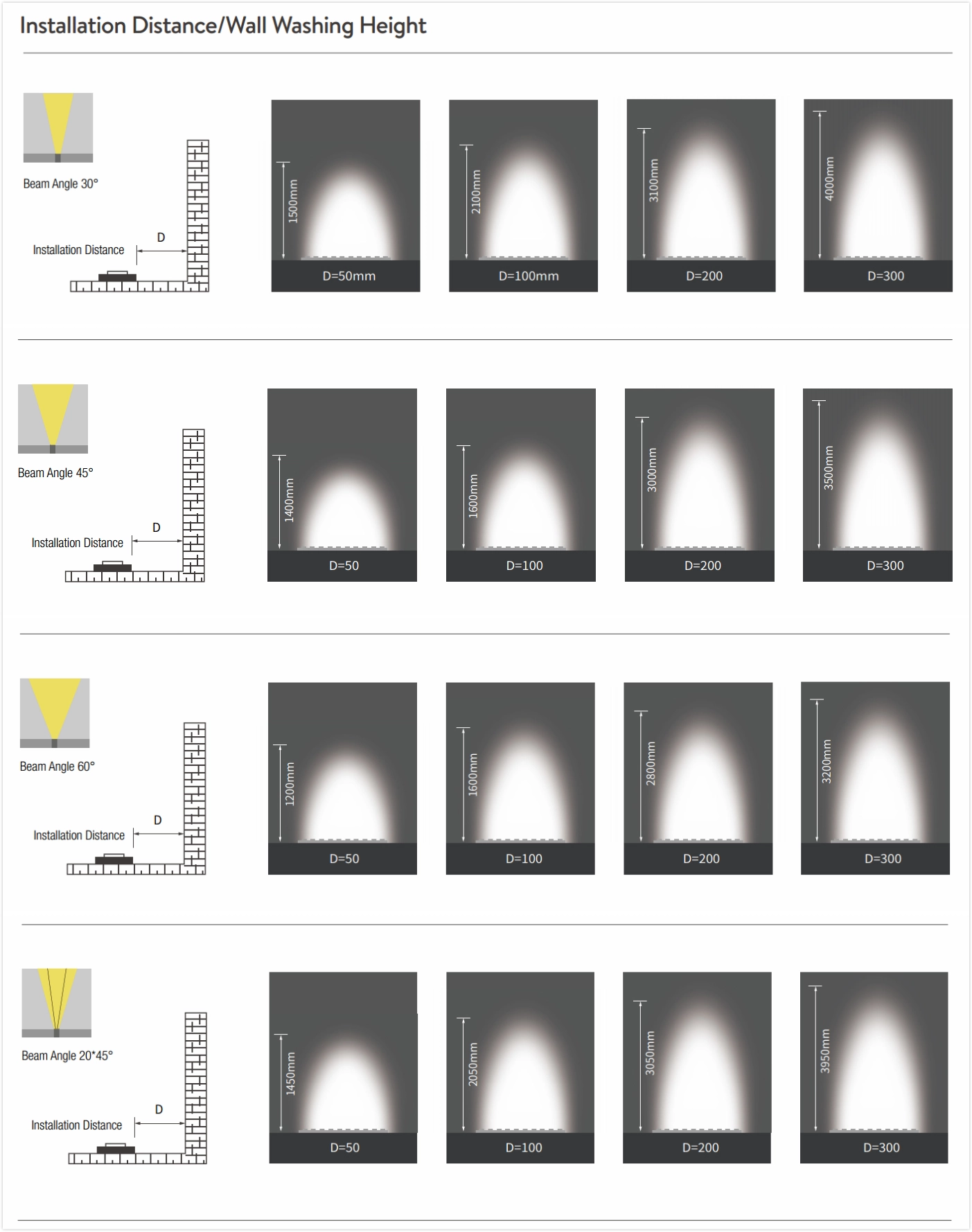
Carefully measure the length and width of the walls and draw out how you want the lights to be set up before you buy anything. Find where the power supplies are and figure out how much power is needed by multiplying the length of the strip by the watts per meter and then adding 20% as a safety cushion. Find the cut points, which are only at certain copper pads that are written on strips every 5 to 10 cm. Plan the route of the wires so that they don't cross any doorways or places with a lot of foot activity. Think about where to put the controls for dimmer switches or smart controllers, especially when managing LED wall lights. They should be between 120 and 150 cm above the finished floor so they are easy to reach.
Preparing the Wall Surface
Isopropyl alcohol should be used to clean mounting surfaces well so that dust, oils, and other residues that make glue bonding less effective are removed. Fill in cracks, sand down rough spots, and prime porous materials to make the surface smooth again. For the best glue performance, the surface temperature should be between 15°C and 25°C. Cold surfaces don't allow for good bonding. Use a laser level to mark centerlines or reference points and make sure the alignment stays the same over long runs. Before you use mechanical bolts, drill mounting holes every 30 to 50 cm, based on the thickness of the wall and the weight of the strip.
Mounting Methods and Techniques
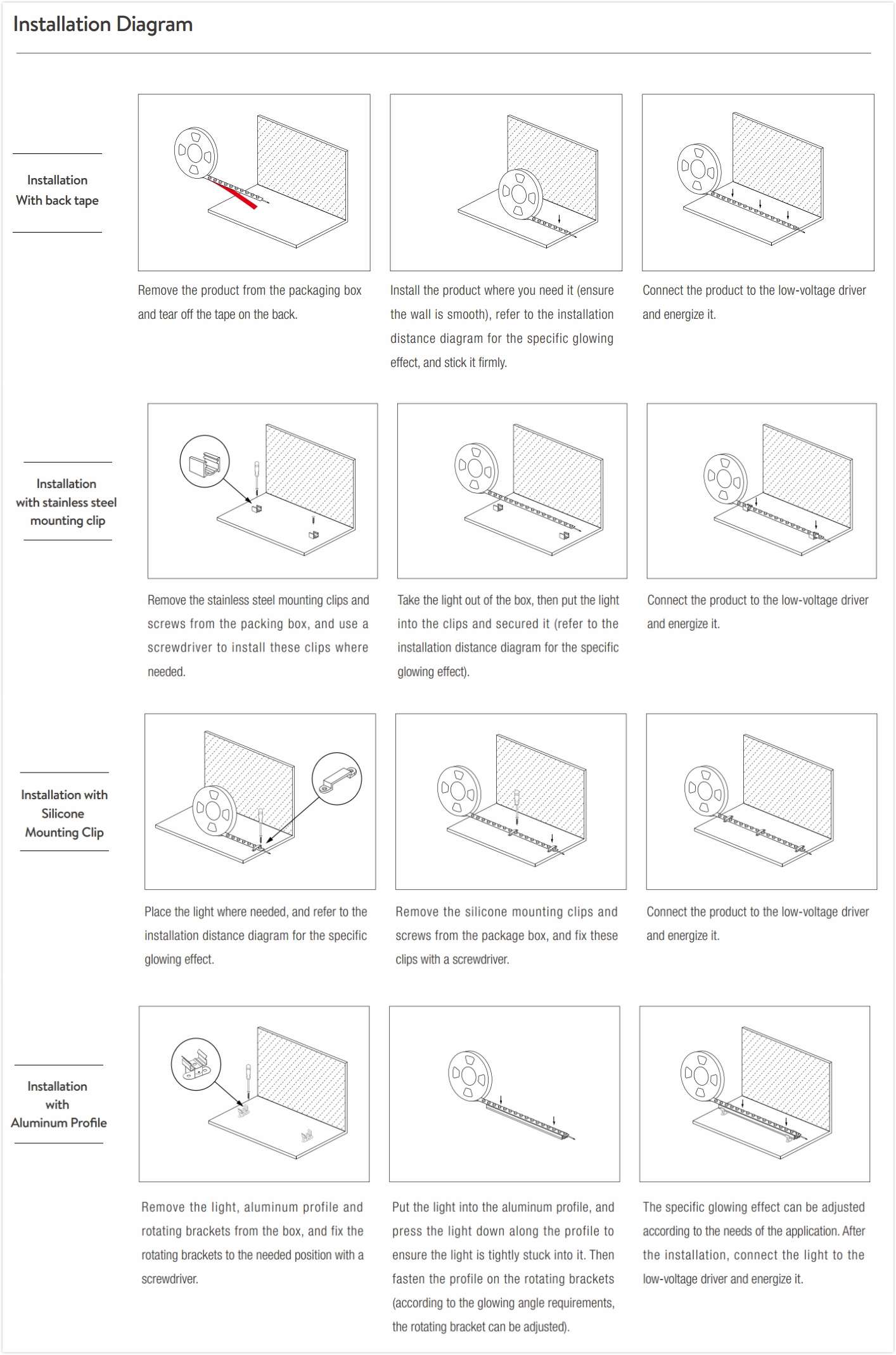
Sticky strips stick to clean, smooth surfaces well. Slowly peel off the backing while pressing down hard to avoid air bubbles or wrinkles. Hold each area for 10 to 15 seconds and apply steady pressure along the whole length. Slide strips into aluminum channels before fixing the unit to walls to give it a professional look and help heat escape. Mounting clips let you make changes and make it easier to take things down during repairs. Space clips every 25 to 40 cm, or as specified by the maker. When it comes to keeping things together, mechanical fixings like screws and anchors are the strongest.
Electrical Connections and Wiring
Match the polarity of the positive (+) and negative (-) leads from the power source to the strip terminals. If you connect them backwards, the LEDs will quickly stop working. Although quality compression connectors work fine for low-current uses, solder connections are more reliable than clip connectors. Use wire sizes that are right for the current load. For example, 18 AWG is fine for most home strips, but 16 AWG or heavier may be needed for business installs. In damp places, seal all connections with heat-shrink tubes or waterproof cases. Before hiding the wires, test each part to make sure it has even lighting and the right color output.
System Testing and Troubleshooting
Turn on the whole system and make sure that the brightness is the same in all of its parts. Flickering can be caused by loose connections, dimmer switches that don't work with each other, or sources that don't have enough power. Color that doesn't match up means that the batches came from different production runs. Always make sure you order enough from a single manufacturing lot. When cables are longer than 5 meters, the voltage drops. To fix this, add power at various places or switch to 24V systems with a higher voltage. Check the real voltage at the ends of the strip and keep the numbers within 10% of the standard values for best performance and long life.
Comparing LED Strip Lights with Traditional LED Wall Lights for Procurement Decisions
Installation Flexibility and Adaptability
Strip lighting can fit almost any building shape because it can bend around corners, curves, and uneven areas that rigid lights can't. Traditional LED wall lights work well in situations where directed beam patterns or specific lighting distributions are needed. Strips are useful for renovation projects because they can be put up without having to change the structure or add new electrical boxes. Wall lights naturally have higher entry protection ratings, which makes them better for places that get hit hard or are prone to vandalism, like parking garages or public buildings.
Energy Consumption and Operating Costs
If you build your LED strip systems well, they can produce 100 to 120 lumens per watt, which is the same or more than standard LED fixtures. Total energy use depends on how well an area is covered. Strips let you place lights precisely, so light isn't lost in areas that aren't being used. Operating costs over a 50,000-hour period support strip systems in most situations because they need fewer parts to be replaced. Traditional light bulbs might have more efficient optics that lower the amount of watt output needed to give the same amount of brightness, which can partly cancel out the initial benefits of higher efficiency.
Maintenance Requirements and Lifecycle Costs
Keeping track of supplies is easier with strip lighting because you only need to keep a few rolls on hand instead of whole fixture setups. Replacement only includes fixing broken parts, not whole machines. In traditional lights, all the parts are housed in a single housing. If a driver or LED array fails, the whole fixture has to be replaced. For quality strips, the warranty usually lasts between 3 and 5 years, which is about the same length of time as a device warranty. There are different ways to clean them. Strips that are visible collect dust and need to be wiped down every so often, while parts that are enclosed keep the optics cleaner but make entry harder.
Smart Technology Integration
Modern LED strip controls have advanced features like being able to be addressed via DMX512, being controlled by smartphone apps, and being able to connect to building management systems. Individual RGB pixel control lets you make lighting scenes that are moving in a way that isn't possible with regular lights. Tunable white strips change the color temperature based on code that recognizes the time of day. This helps companies that use circadian rhythms work better. Motion monitors, daylight collecting, and occupancy recognition work well with both technologies. However, because they are divided, strip systems often offer more precise zone management.
Procuring LED Wall and Strip Lights: Best Practices for B2B Buyers
Identifying Reliable Suppliers and Manufacturers
Suppliers of good quality offer a lot of scientific information, such as IES photometric files, LM-80 LED degradation data, and heat management specs. For example, UL or ETL listing for North American markets, CE marking for the European Union, and RoHS compliance for limits on dangerous substances are all examples of certifications that show that a product meets the requirements of its area. Before placing a big order, ask for samples of the goods you're interested in and test them in real-world situations. For multi-phase projects that need uniform color temperatures and performance traits across orders that last months or years, supplier stability is important.
Quality Standards and Certification Requirements
International guidelines set the rules for how well and safely LED products work. Photobiological safety is covered by IEC 62471; this makes sure that goods don't give off harmful amounts of blue light. LM-79 sets standard methods for testing electrical and photometric components, and LM-80 sets standards for testing LED lumen upkeep components. If a product is certified with the Energy Star label, it means that it meets strict efficiency standards. This means that installations may be eligible for energy refunds or tax breaks. IP (Ingress Protection) grades show how well something can work in different environments. For example, IP20 is good for dry indoor areas, IP65 is good for outdoor weather, and IP68 is good for continuous submersion.
Pricing Strategies for Bulk Purchases
When you buy in bulk, you save a lot of money. Sales of more than 1000 meters often get 20–30% savings compared to small sales. Talk to the supplier about how to set up payment terms that protect both your cash flow and their security. Letters of credit are a good way to do this in foreign deals. To find chances for value engineering, ask for specific quotes that break down the prices of the strip, power sources, controllers, and accessories. When comparing prices, look at the total fixed cost instead of just the prices of the parts. High-end goods that are easier to install may end up costing less overall, even if they have higher unit prices.
Building Long-Term Supplier Relationships
Consistent relationships with suppliers make buying things easier for many projects. Preferred vendor deals spell out up front how prices will be set, when deliveries will happen, and how expert help will work. When suppliers know your quality standards and application needs, design mistakes and order changes are less likely to happen. Suppliers can keep enough supplies and production capacity on hand by staying in touch about future projects on a regular basis. When bugs happen or project needs change without warning, strong relationships make it easier to solve problems quickly, which protects schedules and budgets.
Conclusion
When you install LED strip lights on walls, you get a lot of design options, flexibility, and low energy use for business and industrial uses. To have a successful execution, you need to carefully plan, choose the right products for the job, and carefully put them. Knowing the basic differences between strip lighting and regular LED wall lights helps you make smart buying choices that fit the needs of your project. Having relationships with qualified suppliers makes sure that you can get certified goods, expert help, and prices that are reasonable. Due to its lower running costs, longer lifespan, and ease of installation, LED strip lighting is becoming more and more popular in hotels, stores, offices, and public buildings around the world.
FAQ
Can LED strip lights install on outdoor rough surfaces?
For outdoor installs on textured concrete or brick, you need to use mechanical mounting methods instead of sticky backing. Use metal tubes that already have mounting holes made in them, and put the right anchors every 30 to 40 cm to hold them in place. Pick strips with an IP65 rating or better to make sure they can handle being wet. UV-resistant silicone coating keeps sunshine from breaking down the material. For harsh regions, think about temperature-rated strips that range from -40°C to 60°C. Always use waterproof covers to seal all electrical connections, and power sources that are rated for outdoor use should be put in weatherproof housings.
What color temperature works best for commercial spaces?
The choice of color temperature relies on the aim of the application. 3000K–3500K warm white lighting is good for stores because it makes items look better and makes the setting more welcoming. Most offices use moderate white light between 4000K and 4500K, which makes people more alert without being too cold. For correct color perception during exams, healthcare centers often say 5000K to 5500K cool white. Hospitality places can use white systems that can be adjusted from 2700K for evening mood to 5000K for daily clarity. When color precision is important, always mention a CRI above 90.
Transform Your Project with Premium LED Lighting Solutions
LED strip lights and full-featured LED wall lights made by USKYLED are professional-grade and made for tough business uses. Our engineering team works with designers, builders, procurement managers, and buyers to create unique lighting solutions that meet all the needs of the project. We keep a large stock of certified goods that are ready to ship right away, and our prices for big orders are very cheap. Email our team at sales@uskyled.com to talk about your particular needs and get full product suggestions.
References
1. Illuminating Engineering Society. "RP-6-15: Recommended Practice for Sports and Recreational Area Lighting." New York: IES, 2015.
2. U.S. Department of Energy. "LED Lighting Facts: Understanding Power Supply Performance for LED Lighting Systems." Washington DC: Office of Energy Efficiency and Renewable Energy, 2020.
3. International Electrotechnical Commission. "IEC 62471: Photobiological Safety of Lamps and Lamp Systems." Geneva: IEC, 2019.
4. European Committee for Standardization. "EN 12193: Light and Lighting - Sports Lighting." Brussels: CEN, 2018.
5. National Electrical Manufacturers Association. "ANSI C82.77: Harmonic Emission Limits - Related Power Quality Requirements for Lighting Equipment." Rosslyn: NEMA, 2017.
6. Chartered Institution of Building Services Engineers. "LG10: Daylighting and Window Design." London: CIBSE, 2018.


